
How New York Inmate Records Work
There is no single statewide jail roster that holds every local booking in New York. County sheriffs and county correction departments control local jail rosters outside New York City. The New York City Department of Correction controls city jail custody for the five boroughs. DOCCS controls sentenced state-prison records after reception into the state system. BOP and ICE run separate federal systems.
That structure explains why a search may fail in one portal and succeed in another. A person arrested in a county may be on a sheriff roster before any court record is easy to find. A person sentenced to state prison may disappear from the local roster after transfer and then appear in DOCCS. A federal defendant may remain in local hold status before a BOP locator record appears.
The New York State Commission of Correction county jail directory is the official statewide cross-check for local jail identity.
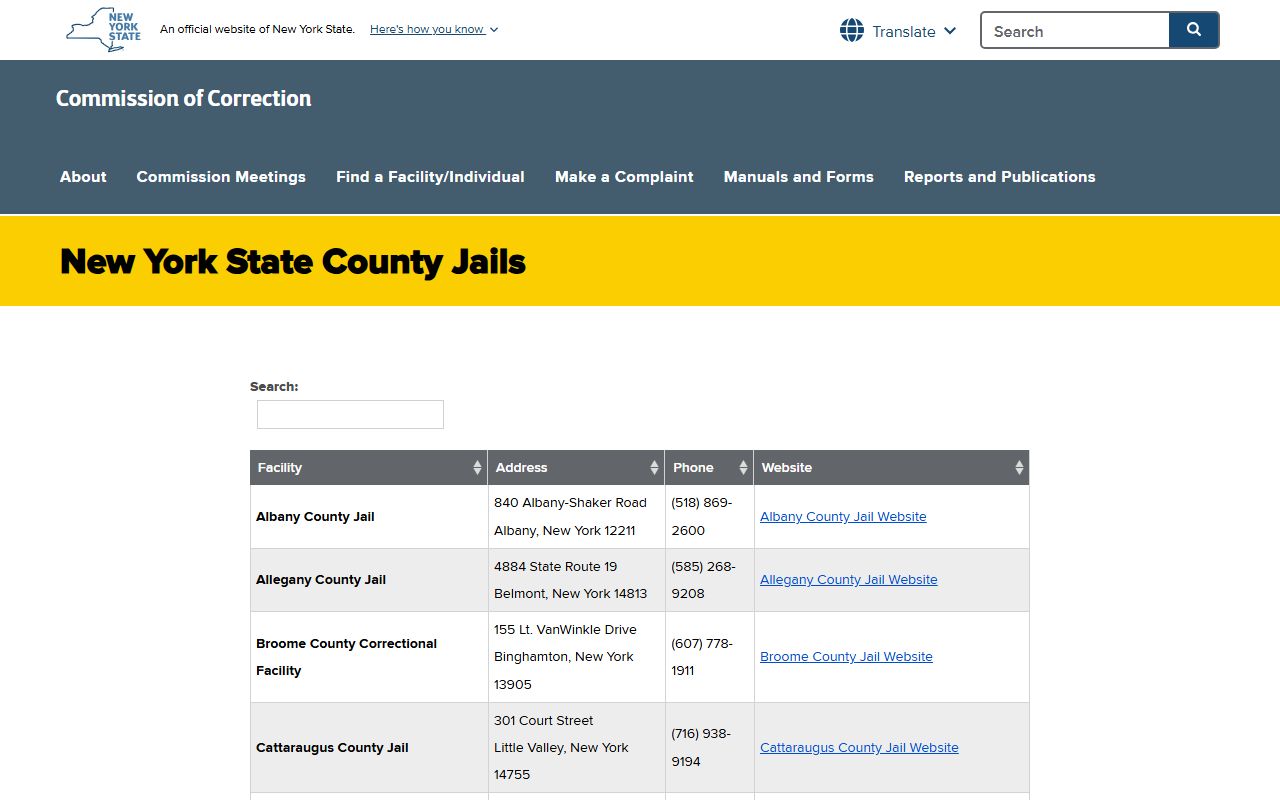
Use that directory to confirm which jail exists, then use the county directory here to route to the local inmate-population site.
Find New York Inmate Records
The best search path is a custody decision tree. Start with what is known: arrest county, court, facility name, DIN, booking number, federal case status, immigration status, or release-notification need. Do not assume DOCCS holds the person merely because the case is in New York.
- For a recent arrest or pretrial hold, identify the county or NYC borough court system and use the local jail roster through the County Directory.
- For a state sentence, search the DOCCS incarcerated lookup.
- For federal custody, search the BOP inmate locator.
- For immigration detention, search ICE ODLS if the person is in ICE custody or CBP custody more than 48 hours.
- For notices, register with New York VINE.
New York Custody Systems
Each New York inmate records system answers a different question. Local rosters answer who is in a jail now. DOCCS answers who is in state prison or whose former DOCCS record remains public. BOP answers federal custody. ICE answers immigration detention. VINE answers status-notification questions.
| System | Who It Covers | Search Clues |
|---|---|---|
| County jail or NYC DOC | Recent arrests, pretrial detainees, local sentences, holds, state-ready people | Name, booking number, arrest county, facility |
| DOCCS | Sentenced New York state prisoners and public former DOCCS records | DIN, NYSID, exact last name, birth year |
| BOP | Federal inmates from 1982 to present | Register number, DCDC, FBI, INS number, name fields |
| ICE ODLS | Current ICE custody and qualifying CBP custody | A-Number, country of birth, name, date of birth |
The BOP locator is the official federal inmate records search.
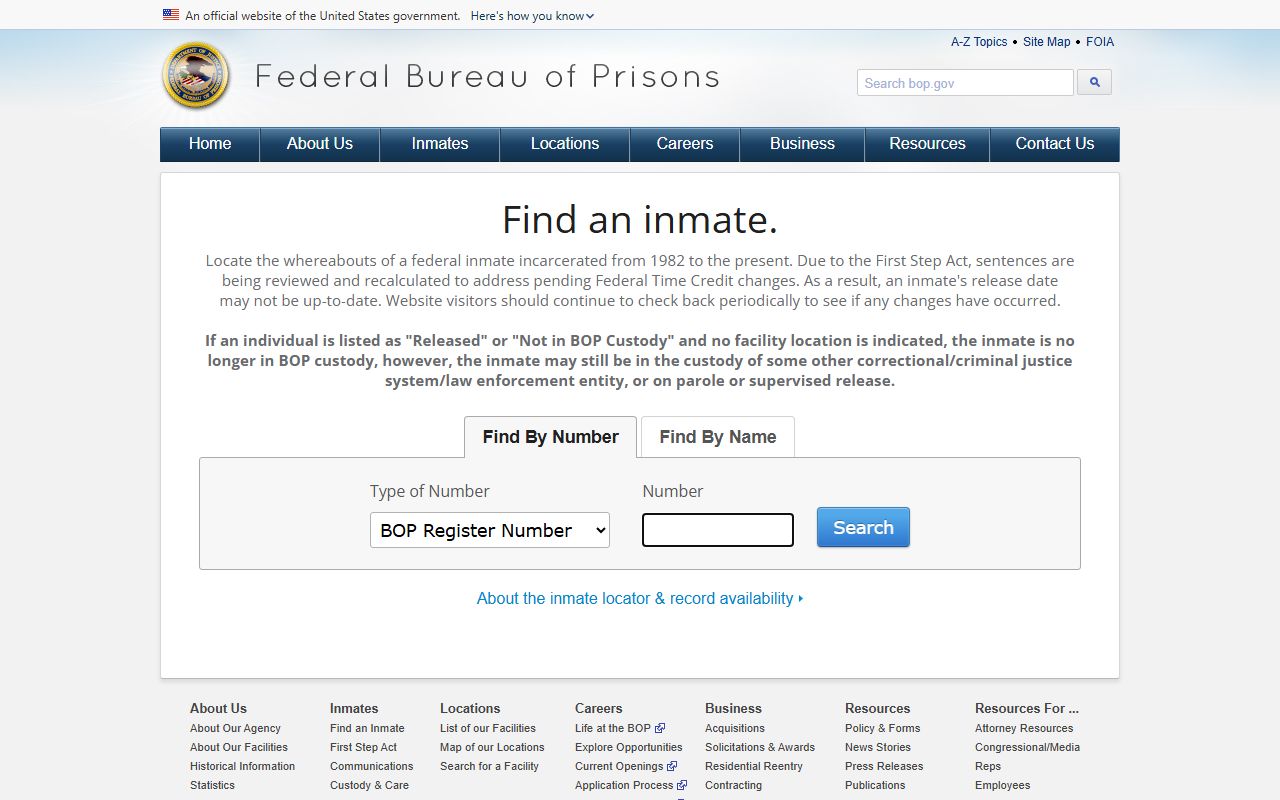
Federal release dates can change after recalculation, so confirm federal records close to the date they will be used.
New York Jail Roster Fields
County jail rosters vary. Some publish current in-custody lists, some use vendor search forms, and some rely on phone or records-request channels. The common fields still tend to follow the same custody logic: identity, booking, charge, bail, facility, and status.
| Field | What It Shows | Why It Matters |
|---|---|---|
| Name and demographics | Identity fields used to distinguish similar names | Match with birth year or age when available |
| Booking number | Local jail tracking number | Useful for calls, requests, and bail windows |
| Booking or admission date | When local custody began | Helps separate current and old records |
| Charges | Booking or filed charges, depending on the roster | May differ from later court charges |
| Bond or hold status | Release conditions, if published | Can change after court appearances |
| Facility or housing | Where the person is held | Needed for visits, mail, and funds |
DOCCS Inmate Records
DOCCS inmate records use state-prison identifiers and public lookup rules. A DIN is the best search clue. A NYSID can be used if already known, but the public lookup does not display it. DOCCS also allows name and birth-year searches. Youthful-offender confidentiality, sealed records, reversed convictions, and Correction Law Section 9 internet-removal rules can limit what appears online.
The DOCCS direct lookup application is the search screen for state-prison inmate records.
When a person has moved from county jail to state prison, the DOCCS page is usually more reliable than the old booking roster.
New York VINE Records
VINE is a custody-status and notification layer. It helps victims, families, and other users receive status updates, but it is not a full replacement for official jail, DOCCS, court, BOP, or ICE records. NYC victim-services material also points to a 24-hour VINE line for automated release-date and status notices for people in New York City DOC or New York State Department of Corrections custody.
The New York VINE portal supports custody status, case information, service providers, and notification registration.
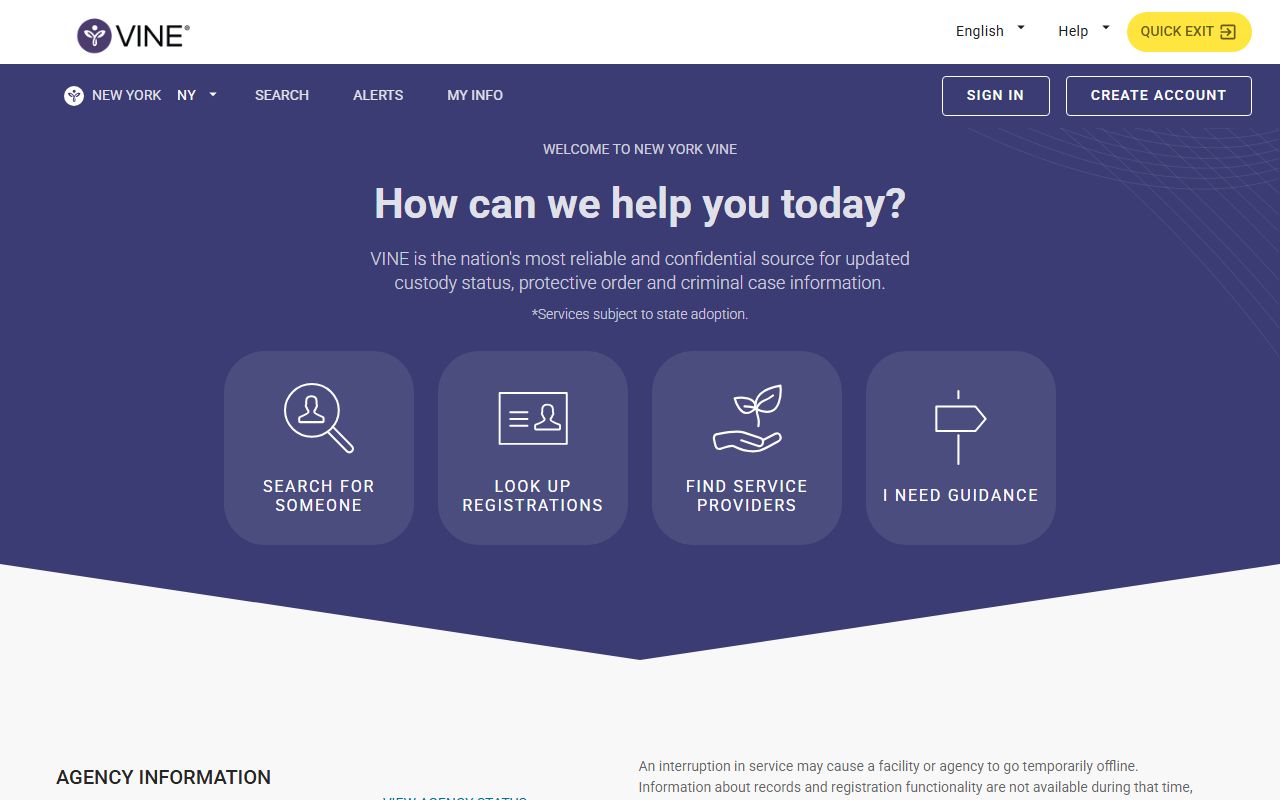
VINE is strongest when the user needs alerts, not when the user needs a complete inmate file.
FOIL Requests for Inmate Records
New York FOIL is the fallback when online records do not answer the question. Send prison-record requests to DOCCS. Send jail-record requests to the county sheriff, county correction department, local records access officer, or NYC records channel. Send court-record questions to the court clerk, WebCrims, eCourts, or CHRS as appropriate. DOCCS says criminal-history or RAP sheet requests should go to the Division of Criminal Justice Services, not DOCCS FOIL.
Strong requests identify a person, agency, date range, facility, DIN, NYSID, booking number, case number, or record type. A narrow request for a booking sheet, custody-history record, release record, or jail incident report is more likely to be processed cleanly than a broad request for every record about a person.
Note: Sealed, youthful-offender, medical, active-investigation, and privacy-protected records may be withheld even when the person was once in custody.
New York Inmate Facilities
Facility rules control visits, mail, phone accounts, commissary, property, and many release logistics. Local jail rules come from the county or NYC DOC. DOCCS prison rules come from state facility pages. Federal and ICE rules come from BOP or ICE. Use the Facility Directory to identify the facility before sending mail, scheduling visits, or funding accounts.
New York Inmate Record Checklist
A clean New York inmate records search uses identifiers from more than one source. Start with a name, but do not stop there. Add the arrest county, borough, booking date, DIN, NYSID, case identifier, facility name, or federal register number when available. These details reduce same-name mistakes and help records staff find the correct file when a FOIL request is needed.
| Clue | Use It For | Source |
|---|---|---|
| Booking number | County jail calls, records requests, and bail questions | Local jail roster or booking paperwork |
| DIN | DOCCS inmate lookup and DOCCS FOIL requests | DOCCS record, prison paperwork, or court documents |
| Case identifier | WebCrims, clerk searches, and court-copy requests | Court portal or clerk |
| A-Number | ICE ODLS searches | Immigration paperwork or counsel |
When a search fails, switch systems before assuming the record does not exist. A person can move from county jail to DOCCS, from local hold to federal custody, from jail to release, or from public display to sealed status.
NYC and County Inmate Records
New York City is the main local exception. Bronx, Kings, New York, Queens, and Richmond counties do not operate separate sheriff jail rosters like many upstate and suburban counties. NYC DOC runs the citywide jail system, including Rikers Island facilities, hospital prison wards, borough court holding functions, and centralized custody tools. A person arrested in Brooklyn, Manhattan, Queens, the Bronx, or Staten Island may be in a citywide DOC command rather than a county-named jail.
Outside New York City, the local record usually sits with the county sheriff or county correction department. Some counties publish online rosters. Some rely on jail information lines, public-records requests, or vendor systems. The statewide search should account for both patterns instead of assuming every county has the same roster fields or same update cycle.
Public Record Search
Sponsored Results