
New York Court Records After Arrest
An arrest record and a court record are not the same thing. Booking creates the jail custody record. The court record starts when a criminal case is opened and charges are filed or scheduled. New York court records after an arrest can show the case identifier, defendant name, court calendar, charges, appearance dates, disposition, warrants, and conviction information when public.
County jail records are still useful because they can reveal the arrest county, booking date, facility, and charge wording used at intake. Court records are the better source for the prosecutor's filed charges, charge changes, case status, and court dates. For custody and booking records, use New York inmate records; for booking photos, use New York jail mugshots.
The New York WebCriminal portal is the main statewide portal for selected criminal courts and future appearances.
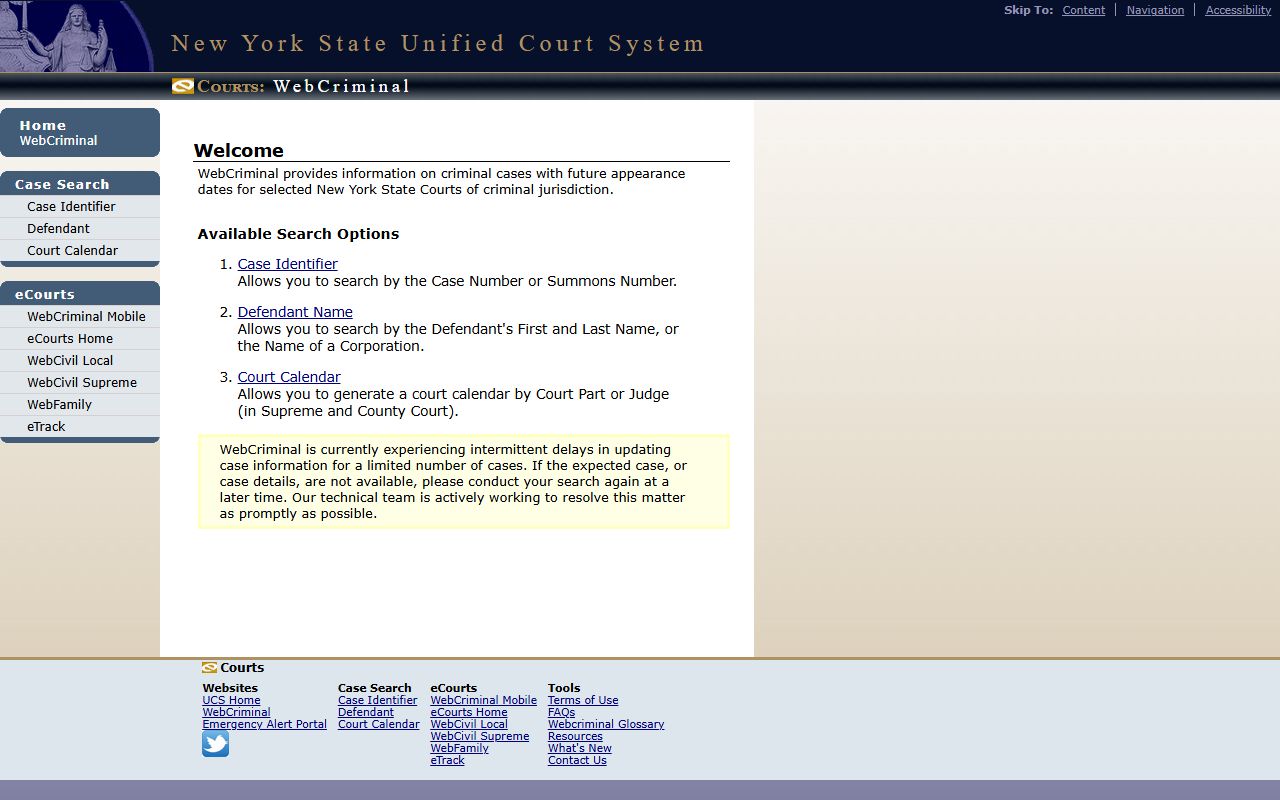
WebCrims is strongest for future criminal appearances, so older or sealed outcomes may require CHRS, a clerk, or a court-specific request.
Search New York Arrest Court Records
New York court lookup starts with the county, court, defendant name, case identifier, or next appearance date. WebCrims exposes Case Identifier, Defendant, and Court Calendar searches. The New York Courts WebCrims explainer says it provides information on criminal cases with future appearance dates for selected courts of criminal jurisdiction.
- Use the jail roster or release paperwork to identify the arrest county, court, defendant name, and charge wording.
- Open WebCrims and search by defendant, case identifier, or court calendar when the case has a future date.
- Use CHRS for broader public open, pending, or conviction criminal-case records in the 62 counties.
- Contact the clerk for copies, dispositions, certificates, or case files not available online.
The New York Courts records guidance explains court-record and case-information routes.
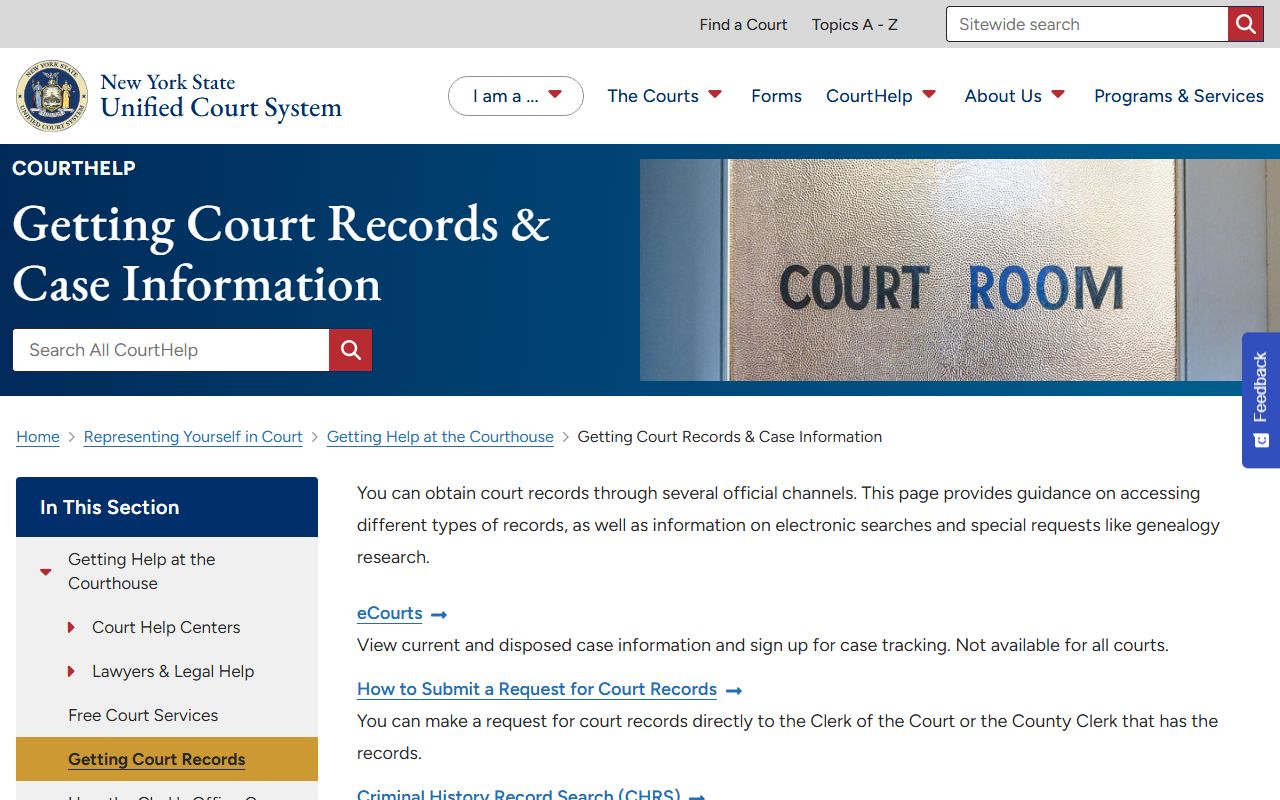
That guidance is useful when a searcher needs copies or case information rather than only a next court date.
New York Charging Documents
Charging documents explain why a court case exists after a jail arrest. The names and paths vary by court level and case stage, but the core idea is stable: the prosecutor or accusing instrument sets out the legal charge, and the court record tracks what happens to it.
| Document | Plain Meaning | What to Check |
|---|---|---|
| Complaint | An initial accusation or sworn allegation used early in the case | Charge text, dates, court, and defendant identity |
| Information | A formal non-indictment charging document in eligible cases | Current charge level and amendments |
| Indictment | A grand-jury charging document for felony prosecution | Counts, felony level, and arraignment status |
New York Arrest Charge Status
Charges can change after booking. A jail roster may show the arrest charge or intake charge. The court record can later show amended, reduced, dismissed, added, or indicted charges. That is why custody records and court records should be checked together before drawing conclusions.
| Status | Meaning |
|---|---|
| Pending | The case or charge remains open and has not reached final disposition. |
| Amended or reduced | The filed charge changed from an earlier booking or complaint description. |
| Dismissed | The charge was terminated without a conviction on that count. |
| Convicted | The court entered a conviction on a charge or plea. |
| Sealed | Public access may be restricted by statute, court order, or case outcome. |
Important: An arrest or pending charge is not a conviction, and pretrial detention does not decide guilt.
Jail Records and Court Records
A New York jail record answers custody questions. It may show booking date, facility, bail or hold status, and release. A New York court record answers case questions. It may show charges filed, calendars, warrants, disposition, sentence, and sealed status. A person can be released from jail while the court case remains pending.
| Question | Use Jail Record | Use Court Record |
|---|---|---|
| Where is the person held? | Yes | Sometimes, through remand or bail orders |
| What charges were filed? | Booking charge clue | Best source |
| What is the next court date? | No | Yes, when public and indexed |
| Was there a conviction? | No | Yes, if public and not sealed |
New York CHRS Search
New York Courts Criminal History Record Search, or CHRS, covers public records relating to open, pending, and conviction criminal cases from County/Supreme, City, Town, and Village courts in all 62 counties. Sealed records are not disclosed. The research also notes that Town and Village criminal disposition data is limited, so CHRS may not be complete for every local court detail.
CHRS is different from a jail roster and different from WebCrims. Use WebCrims for future criminal appearances in selected courts, CHRS for broader statewide public criminal-history records, and the clerk for certified or case-file copies.
Sealed New York Arrest Records
New York public access can be limited by sealed records, youthful-offender confidentiality, reversed convictions, and other statutory restrictions. DOCCS lookup rules also remove certain non-violent conviction information from the public website under Correction Law Section 9 after the required time passes. A no-result search in a court or inmate portal is not proof that no arrest or case ever existed.
| Category | Public Access Effect | Where to Verify |
|---|---|---|
| Sealed case | Public lookup may omit the record | Court clerk or counsel |
| Youthful offender | Confidential treatment can block public display | Court or counsel |
| Reversed conviction | DOCCS can delete public lookup display after sealing | DOCCS and court records |
VINE and Court Notices
VINE can supply custody status and some criminal case information, but it is not the court docket. It is best for release and status notifications. When court dates, charges, or dispositions matter, use WebCrims, CHRS, eCourts, or the clerk. When current custody matters, use the jail or DOCCS locator.
The New York VINE portal is the notification channel tied to custody and case status.
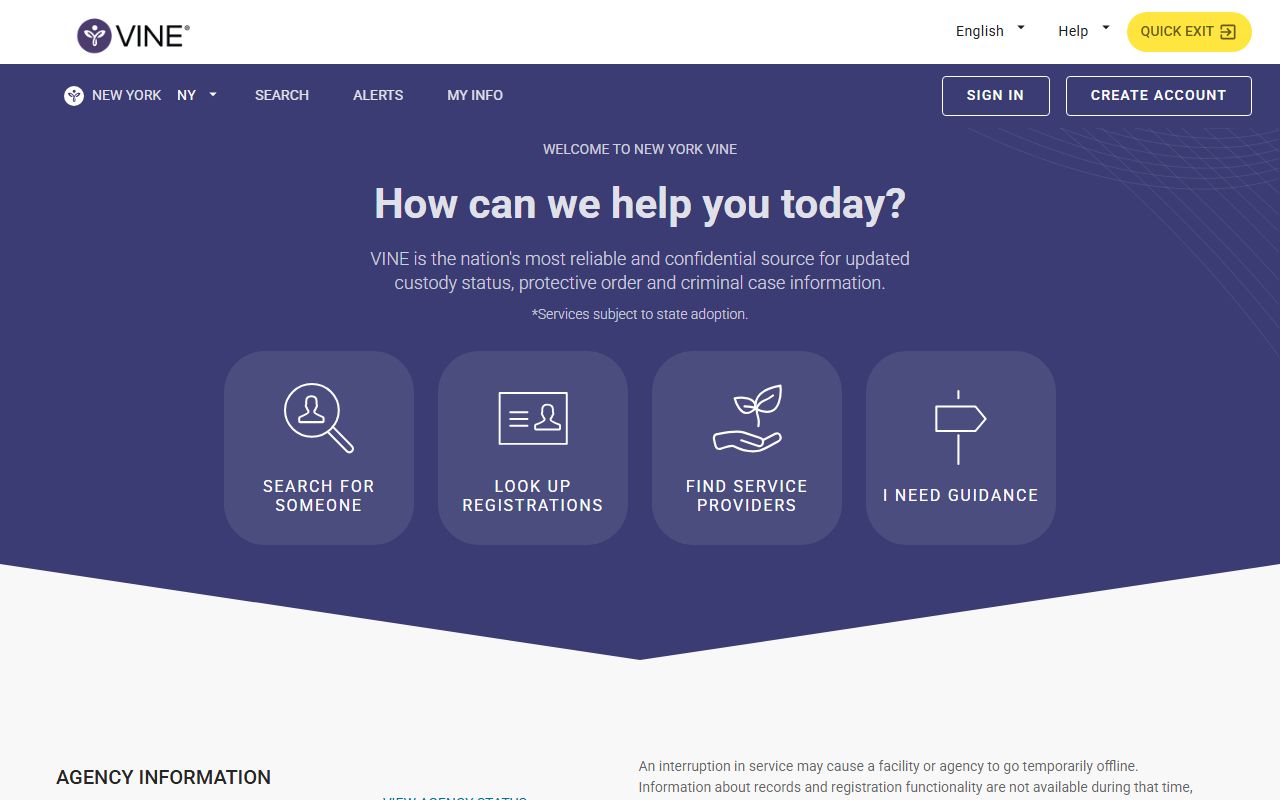
VINE can reduce repeated calls, but it should be checked against the court or jail when a deadline is close.
Federal Cases After Arrest
Federal custody and federal court records use different systems from New York state courts. A person may be booked in a local jail on a federal hold, later appear in federal court, then move into BOP custody after designation. The BOP locator is not a state court record, and WebCrims is not a BOP search.
The BOP inmate locator covers federal inmates from 1982 to present.
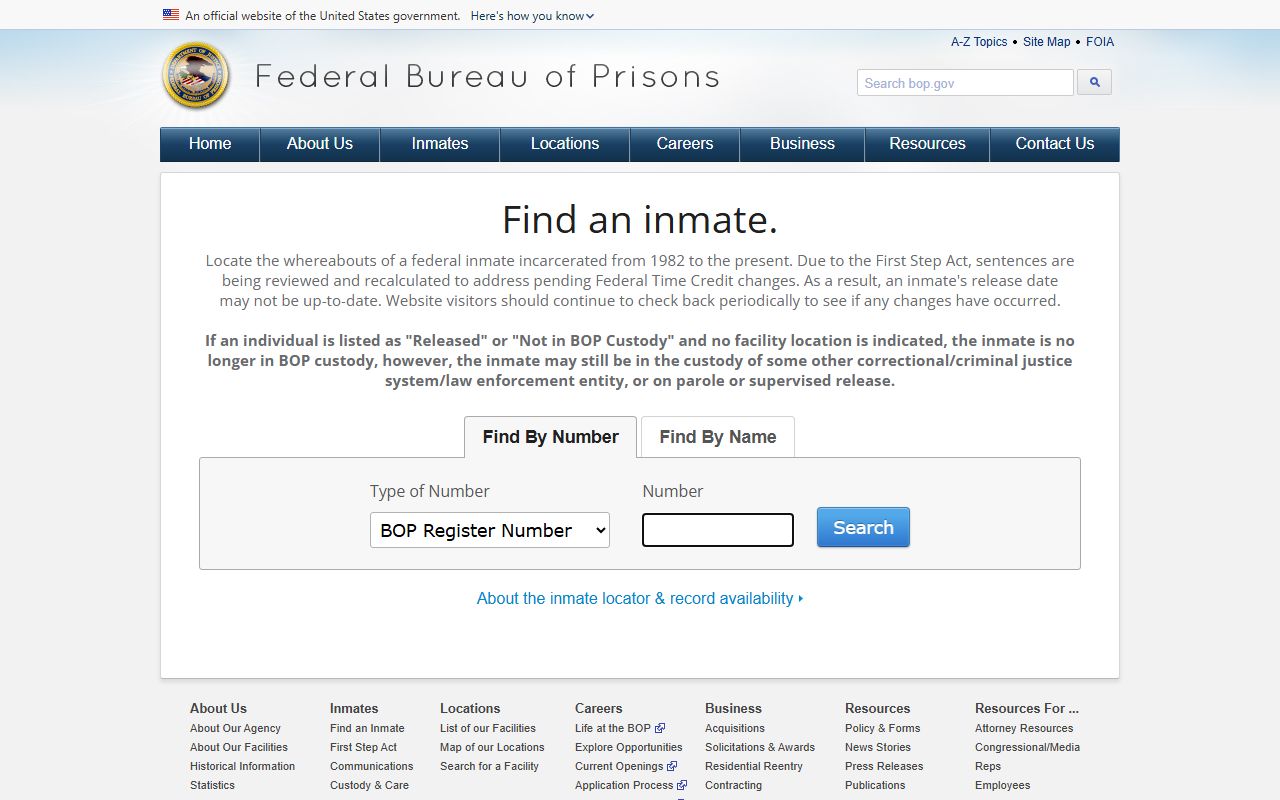
Federal release dates can move after recalculation, so the BOP record should be checked again before relying on a date.
New York Court Record Checklist
A strong court-record search after a jail arrest starts with the facts from the booking record, then verifies them in the court system. The arrest charge may not be the filed charge. The jail may show a hold or bail status before the court docket shows the next appearance. WebCrims, CHRS, and the clerk each answer a different part of the question.
| Need | Best Source | Limit |
|---|---|---|
| Current custody | County jail, NYC DOC, or DOCCS | Not a full court docket |
| Future court date | WebCrims when covered | Selected courts and future appearances |
| Public criminal-history search | CHRS | Sealed records not disclosed |
| Certified copy or file detail | Court clerk | Fees, identity rules, and access limits vary |
FOIL and Court Copies
FOIL applies to New York state and local agencies, but court records also follow court access rules and clerk procedures. A jail incident report, booking sheet, or custody-history record may be requested from the jail or records access officer. A complaint, disposition, certificate, or case file usually belongs with the court. DOCCS prison records use DOCCS FOIL. Criminal-history or RAP sheet questions are not handled by DOCCS FOIL.
A precise request should name the defendant, court, case identifier, arrest date, facility, and record type when known. Broad requests for every record about a person are easier to delay, narrow, or deny. Sealed records, youthful-offender matters, active investigations, and privacy-protected material can remain unavailable even when related public docket information exists.
Public Record Search
Sponsored Results